
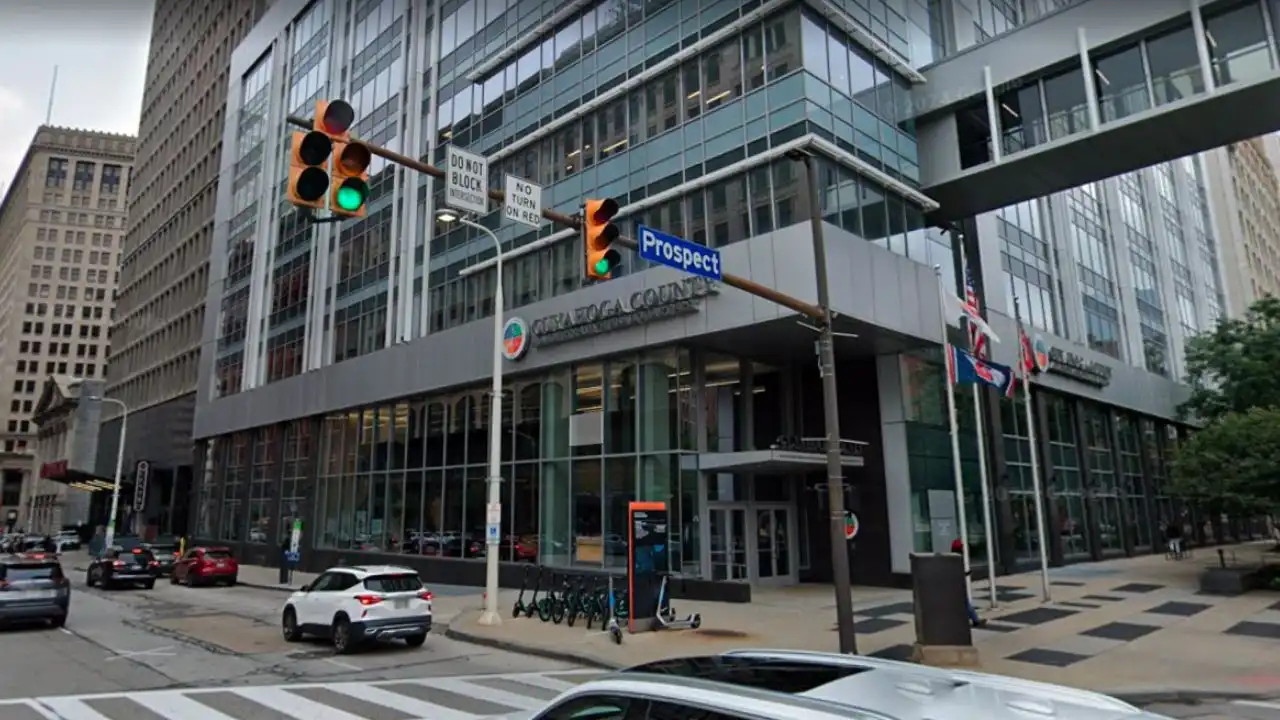
Unlike their counterparts in some other regions of the United States, Ohio counties are not the primary source of public services for the communities within their borders.
Even so, Cuyahoga County officials are willing to step in if a city, village or township has difficulty maintaining a service or finding qualified candidates for specialized positions. In other cases, they are willing to provide financing for new initiatives.
Think of it as regional collaboration light. Very light. The county serves as a back shop, or a broker/sponsor. Communities receive some relief, but an expensive status quo remains intact.
Seeing a need, the county has launched a new Division of Building Standards that will review commercial and residential building plans and issue permits for communities that opt in on the service. (Municipalities will continue to perform code enforcement-related building inspections.) Fees paid by property owners and developers are expected to cover the cost, avoiding expense for the county while saving money for municipalities that use their general fund to subsidize their departments or contract with a third party.
Many other Ohio counties provide a similar service. Cuyahoga County patterned the new division after a model in Summit County.
Two years ago, Cuyahoga County and other funders helped launch the piloting of First CALL, a program that pairs social workers with first responders in Shaker Heights, Cleveland Heights, South Euclid, Richmond Heights and University Heights.
First CALL grew out of a solo effort by Shaker Heights. Now the county is offering financial assistance to other communities that want to take a similar approach to crises tied to mental health.
“I commend our city leaders for moving the needle on this, for thinking out of the box,” County Executive Chris Ronayne said at a news conference introducing First CALL. “What we’re trying to do is mine good civic ideas like we’ve seen in Shaker.”
Other examples of recent county support include:
- A $1 million housing fund for purposes such as increasing the supply of affordable and workforce housing, spurring housing rehabilitation and strengthening weak sections of the market.
- The county Planning Commission’s design of a model code for transportation-oriented development, a term for trending mixed-use projects that create walkable, vibrant neighborhoods and, via transit options, give people better access to goods, services and jobs. The county also offers developers gap financing for projects in designated TOD Program Zones.
- A unified zoning code, also produced by the Planning Commission. Use of the code is optional, but widespread adoption would create consistency for developers.
- Working with other members of the Environmental Crimes Task Force to address illegal dumping and strengthen housing maintenance enforcement. Besides the county, the task force includes the City of Cleveland, the Cleveland Police Department; the county Board of Health, Prosecutor’s Office and, Sheriff’s Department; and the Cuyahoga County Solid Waste District.
The list could grow, but due to the county’s own budget constraints, any direct services, like those from the Division of Building Standards, would have to be self-sustaining, said Christopher Alvarado, county director of regional collaboration. At some point, he said, struggling communities will have to find other ways to share services .
“There is only so much the county can do,” Alvarado said. “We are not going to be able to handle everything.”
The county’s low-profile approach makes sense. Given strong support for autonomy among the state’s cities, villages and townships and the sovereignty municipalities enjoy under the Ohio Constitution, it might be better to encourage voluntary cooperation and fill voids where appropriate.
A survey that Cleveland State University’s Maxine Goodman Levin School of Urban Affairs and the county’s Department of Regional Collaboration conducted with communities two years ago underscores the tension that thwarts farther reaching measures.
The survey measured interest and participation in partnerships. Of the 59 cities, villages and townships in the county, 39 responded. A large majority said they were involved in partnerships – but most of those pairing governments were with the county. A majority would consider additional partnerships but cited attachment to local control and cost as the leading obstacles. See the survey results.
Ed FitzGerald, the first executive to be elected after Cuyahoga County switched to its executive-council system of government, pushed for regional cooperation while holding office from 2011 through 2015. The job description for the then-new director of regional collaboration position added this nudge: “Regions are quickly becoming the defining unit of the global economy. Those regions that align their assets to compete globally are better positioned to grow jobs, increase incomes and attract investments.”
Progress has been grudging.
It took half his term, but FitzGerald’s administration persuaded all 59 communities in the county to take a pledge not to “poach” businesses from each other. The agreement later lapsed and was not renewed.
In 2011, four Cleveland suburbs – Moreland Hills, Orange Village, Pepper Pike and Woodmere – agreed to explore merging. FitzGerald called a news conference where he praised “a bold collaboration by four leaders who are willing to do the smart and right thing for their communities.”
The four communities, which belong to the same school district and at the time had a combined population of only 13,500, eventually shelved the idea amid negative public reaction, difficulty meshing tax rates and other logistics, and questions about the amount of savings.
Many Cleveland suburbs have agreed to joint dispatching for public safety services, most notably through Chagrin Valley Dispatch, which employs 140 full-time dispatchers to serve an area spanning 36 communities, 186 square miles and a combined population of 318,000 residents. Ohio is pressing for similar consolidations statewide to reduce 911 call transfers.
Ed Jerse, the county’s first director of regional collaboration, agreed that “working around the edges” to address “nuts and bolts” functions – for example, using the county for information technology or legal services or having it facilitate agreements for snowplowing or trash pickup — might produce quicker wins. He suggested considering some variation of the model in Los Angeles County, which contracts to provide services to cities.
Ed Kraus, director of regional collaboration under FitzGerald’s successor, Armond Budish, thought police and fire mergers might occur during his time on the job. But existing union contracts proved difficult to “unwind,” he said.
Kraus still believes that fire department consolidations could produce big benefits in areas such as fire trucks, other expensive equipment and facilities. In some cases, he said, a fire station in one community might be just a mile or so from a station in the municipality next door.
Kraus, now mayor of Solon, said the city is considering working with neighbors to pair crisis counselors with first responders. He is open to other ideas but said well-established practices are difficult to change.
“It has to be organic. You’re not going to just wake up one day and say you’re going to merge,” he said. “You have to demonstrate success and see how a regional approach benefits communities.”